Surgery that removes excess abdominal skin and repairs the separation of the rectus muscles, for patients left with loose skin after one or more pregnancies or a significant weight loss. Performed in a full hospital by Dr. José Antonio Orozco Gómez, plastic surgeon board-certified by the CMCPER.
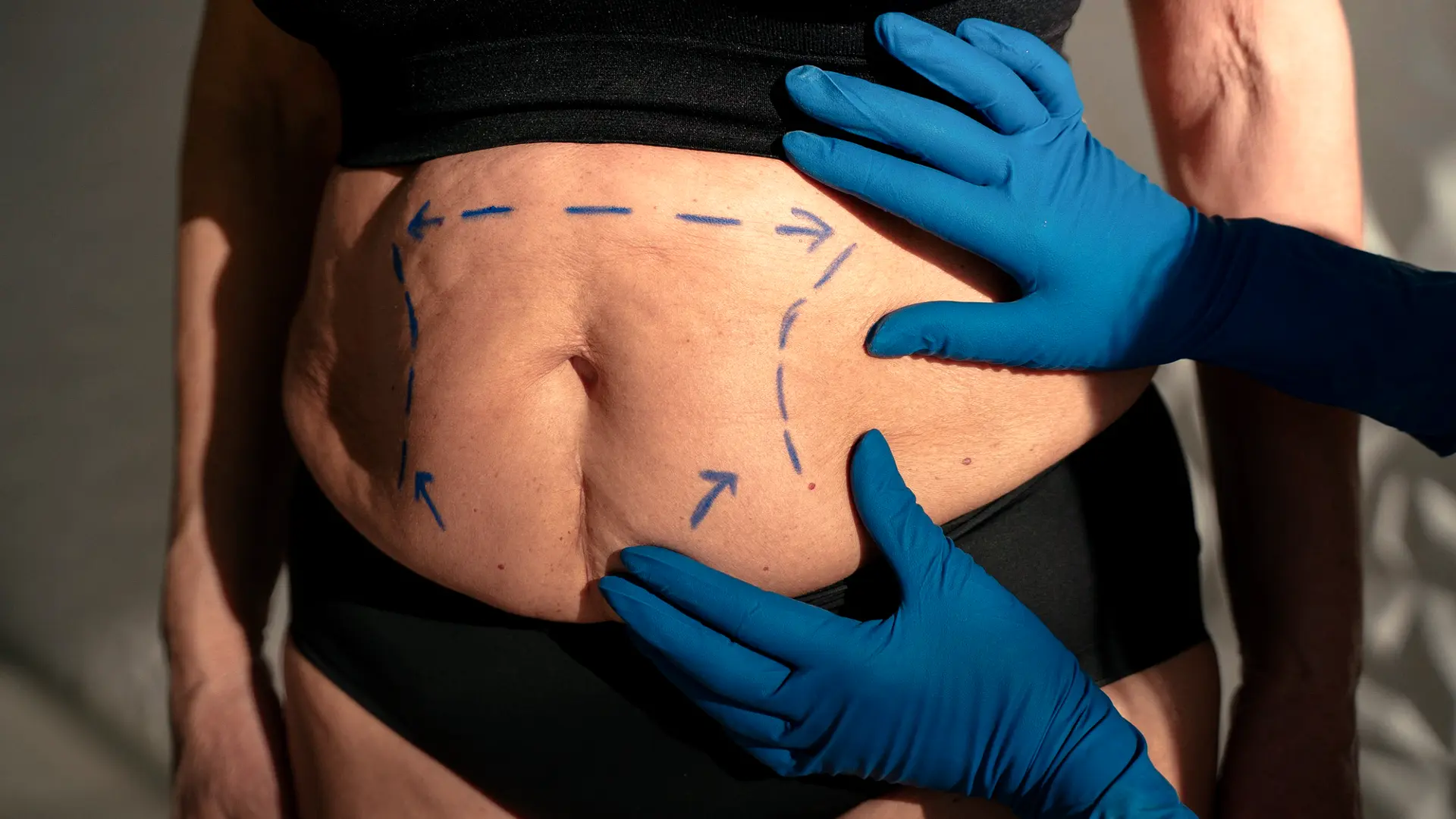
An abdominoplasty — a tummy tuck — removes excess skin and fat from the abdomen and, where needed, sutures the rectus muscles back together. It corrects what neither diet nor exercise can: skin that has lost its elasticity and an abdominal wall that has separated.
The difference from liposuction, in one sentence
Liposuction removes fat; abdominoplasty removes skin and repairs muscle. If the issue is volume with firm skin, it is liposuction. If it is hanging skin or an abdomen that bulges when you sit up, it is abdominoplasty. Many cases need both, done in the same procedure.
Abdominal wall
Diastasis recti: the problem you cannot see
During pregnancy the rectus abdominis muscles separate along the midline. In many women they never close on their own, and no amount of core work corrects it: the abdomen stays projected forward even without fat. That is diastasis recti, and it is repaired only surgically, by suturing the fascia back together.
The correction is not purely cosmetic. With the abdominal wall restored, many patients report improvement in lower back pain and in trunk support.
Candidacy
Who is a good candidate?
You are a good candidate if you have excess abdominal skin, a stable weight for at least six months, no plans for further pregnancies, and general health suitable for major surgery.
It is better to wait if:
You are planning a pregnancy. A later pregnancy undoes the muscle repair.
Your weight is still dropping. Operating on a stabilised weight gives a better result.
You smoke. Tobacco must be stopped for several weeks before and after: it compromises blood supply to the flap and multiplies the risk of skin necrosis.
Technique
Types of abdominoplasty
Type
What it includes
For whom
Mini-abdominoplasty
Skin below the navel, without repositioning it
Mild excess, limited to the lower abdomen
Full abdominoplasty
Skin of the whole abdomen, muscle repair, navel repositioning
The most common case after pregnancy
Extended abdominoplasty
Extends to the flanks and lower back
Massive weight loss
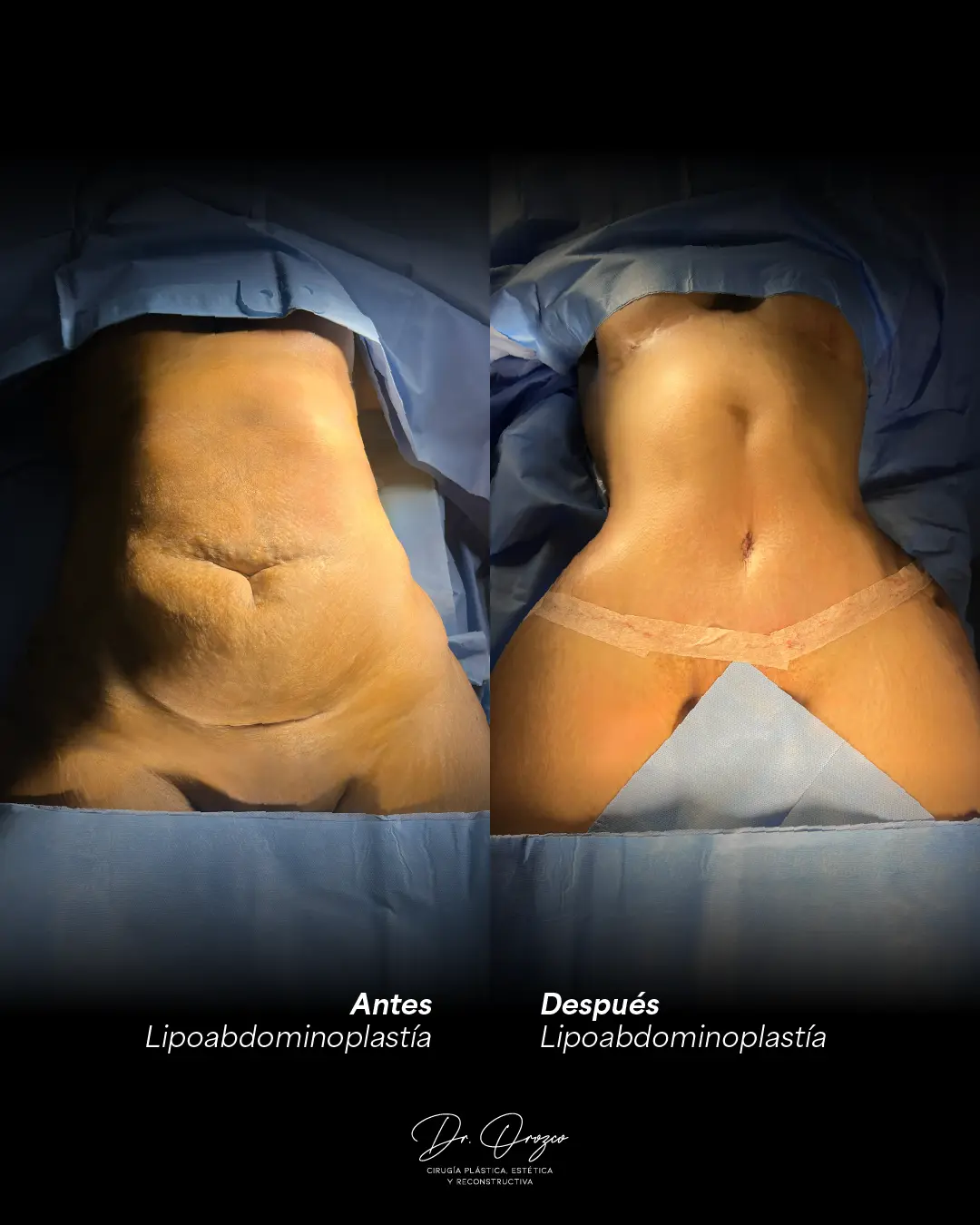
Lipoabdominoplasty
Abdominoplasty plus liposuction of flanks and waist in one procedure
When localised fat is also present
Results
Before and after
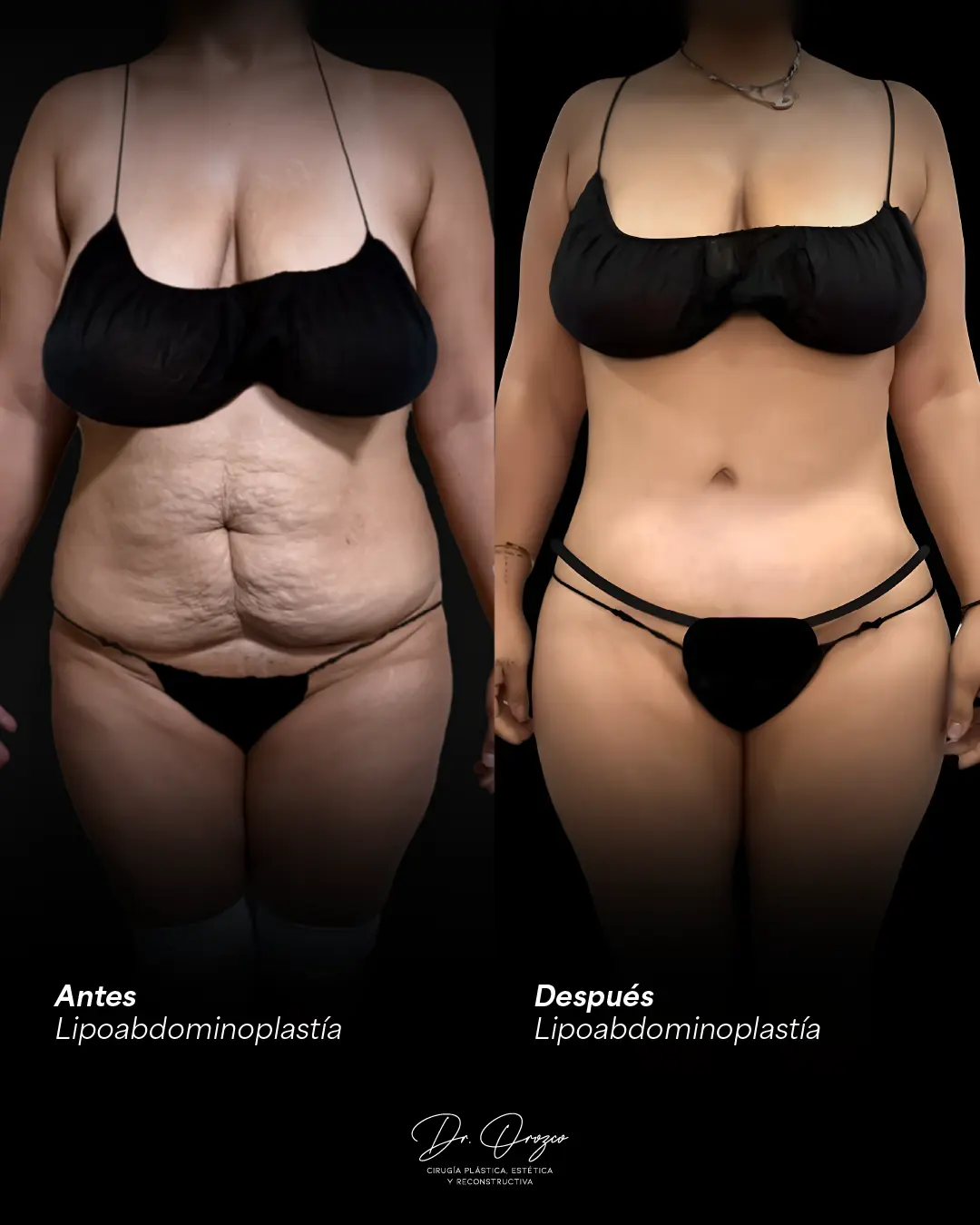
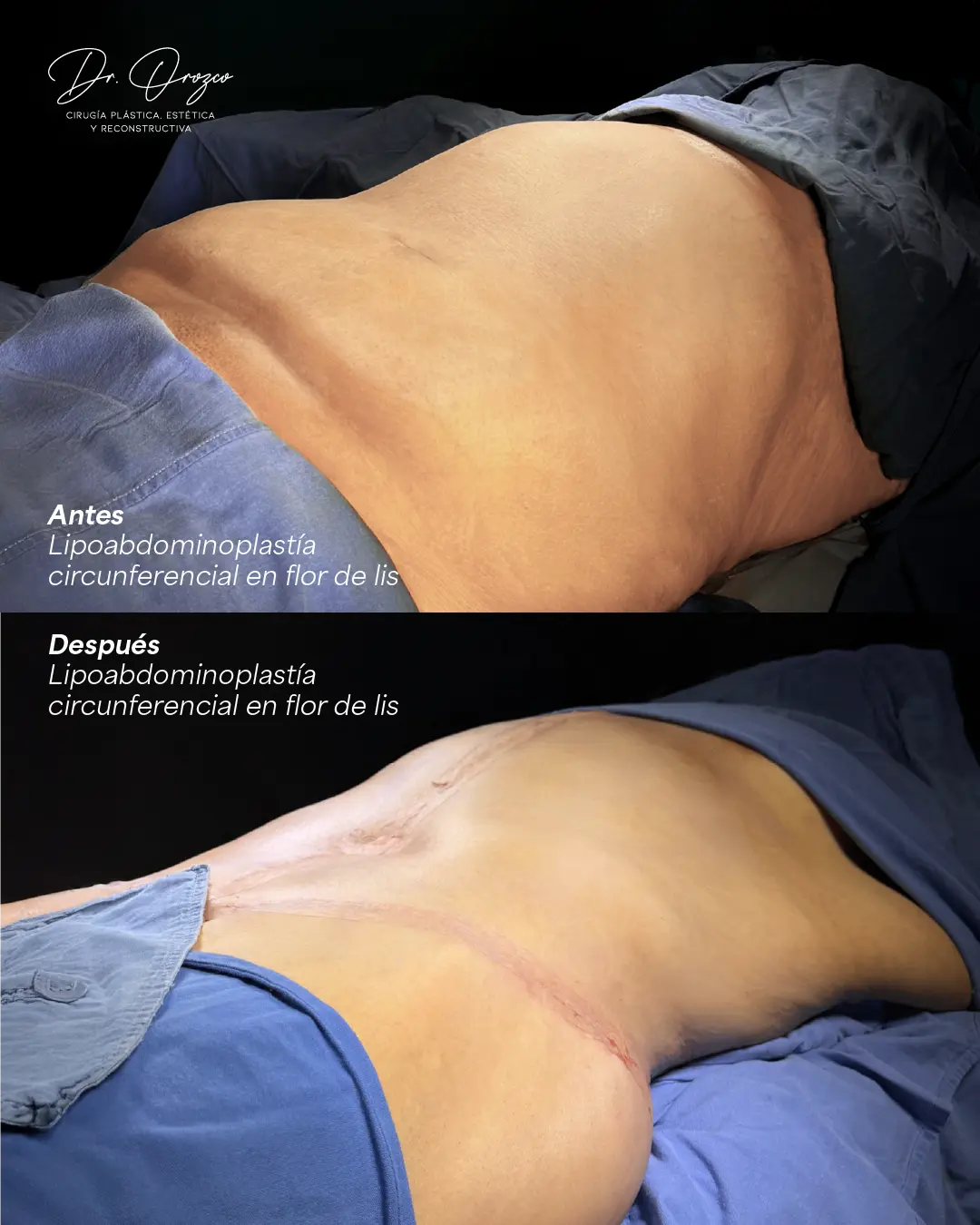
Real cases operated in Merida, published with written informed consent.
Case 01 · Abdominoplasty with muscle repair · Real case, published with written informed consent.Case 02 · Lipoabdominoplasty, profile view · Real case, published with written informed consent.Case 03 · Lipoabdominoplasty · Real case, published with written informed consent.
Aftercare
What recovery is like
Stage
What to expect
Days 1–2
24 to 48 hours in hospital. Semi-flexed posture. Drains in place.
Days 3–7
Drains removed depending on output. Progressive walking, hunched at first.
Weeks 2–3
Upright posture restored. Return to desk work between days 15 and 21.
Weeks 4–6
Continuous compression garment. No lifting or abdominal strain.
Months 2–3
Return to exercise with clearance.
Months 6–12
The scar matures and fades. Final result.
This is major surgery with a real recovery. Plan two to three weeks away from your activities and help at home for the first 72 hours.
Plain speaking
The scar: what to know beforehand
An abdominoplasty leaves a horizontal scar low on the abdomen, and that is not negotiable — it is the cost of removing the skin. What is controlled is its position and its quality. It is placed as low as possible, in the line covered by underwear and swimwear, and its healing is managed specifically through the first year.
If someone offers you this result without a scar, they are not describing this operation.
Risks and safety
The main risks are seroma, delayed wound healing, hypertrophic scarring, altered skin sensation over the abdomen and venous thrombosis. They are reduced by appropriate selection, stopping tobacco, drains, compression stockings, early mobilisation and antithrombotic prophylaxis.
Every patient is cleared by internal medicine and cardiology before a surgical date, and surgery takes place in hospital with a certified anaesthesiologist.
Reviews
Patient reviews
“The doctor was very punctual, explained the procedure very clearly and gave me all the follow-up instructions. Careful and responsible.”
“No words — excellent service. Very attentive and helpful throughout.”
“Excellent care, and above all you feel you are in good hands.”
Common questions
Frequently asked questions
Can I have a tummy tuck if I have high blood pressure?
In most cases yes, provided the hypertension is controlled and internal medicine and cardiology confirm it. What rules out elective surgery is not the diagnosis but poor control: stable readings on treatment, no end-organ damage and clearance from your physician allow safe surgery. If readings are uncontrolled, surgery is postponed until they are managed.
What is the difference between a tummy tuck and liposuction?
Liposuction removes fat through very small incisions and corrects neither skin nor muscle. Abdominoplasty removes excess skin, repairs muscle separation and leaves a low horizontal scar. The choice depends on what is in excess: fat, skin, or both.
How much time off will I need?
15 to 21 days for desk work, four to six weeks for physical work or exercise. The first three days require help at home.
Can it be combined with breast surgery?
Yes — the combination commonly called a mommy makeover. It is assessed in consultation and done in one stage when general health allows and total operating time stays within safe limits.
Can I get pregnant afterwards?
Physically yes, but a later pregnancy separates the repaired muscles again and stretches the skin. That is why the recommendation is to have surgery once you are not planning more pregnancies.
How is the cost of a tummy tuck in Merida set?
It is determined at your consultation, based on the type of abdominoplasty, whether liposuction is combined, operating time, hospital days, the anaesthesia team and pre-operative testing. You leave with a written quote.